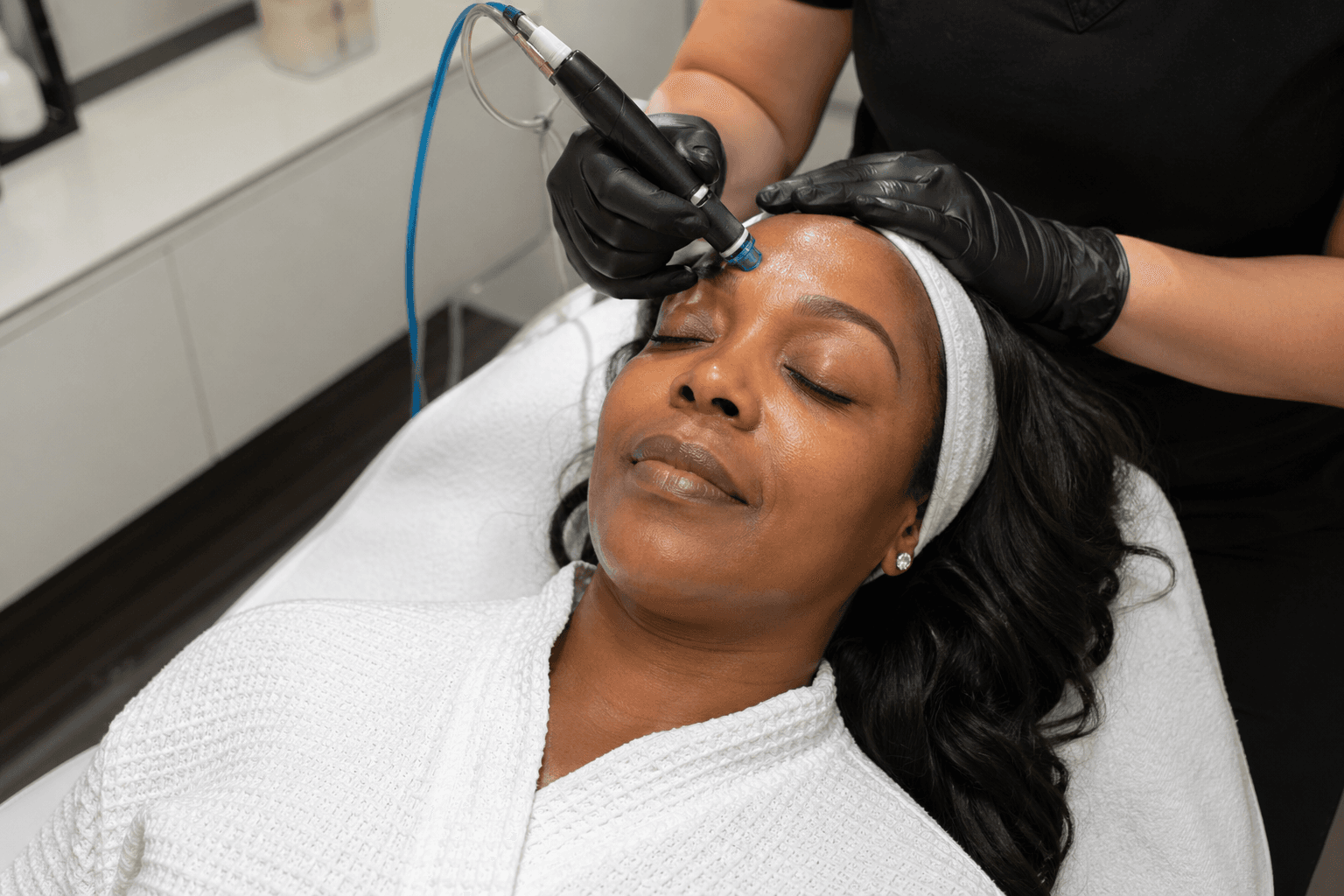
A HydraFacial uses vacuum suction and a vortex-tip wand to clean pores, exfoliate dead skin cells, and push hydrating serums into the skin in a single appointment. No downtime. Results visible the same day. In metro Detroit, sessions run $150–$300 depending on provider and tier. Most appointments take 30 to 45 minutes.
TL;DR — Key Takeaways
- Three steps in one appointment: cleanse and peel, extract impurities, infuse hydrating serums
- Metro Detroit pricing: $150–$300 base; add-on boosters and LED therapy add $50–$150
- No downtime — skin looks better the same day, ideal for event prep 1–2 weeks out
- Safe year-round in Michigan, works on most skin tones including melanin-rich skin
- Six-session series produces measurable improvements in acne, texture, and hydration; single sessions still produce visible results
What Does a HydraFacial Actually Do?
A HydraFacial cleans and hydrates at the same time. The device tip creates a vortex — a spiral suction effect — that pulls debris and dead cells out of pores while simultaneously pushing serums in. The three steps happen in sequence during a single appointment:
- Cleanse and peel: A mild glycolic and salicylic acid blend loosens dead skin cells and sebum from the surface without the irritation of a traditional chemical peel.
- Extract: The vortex suction removes congestion from pores — blackheads, sebaceous filaments, and debris — without manual squeezing. Most patients with sensitive skin tolerate this step without discomfort.
- Hydrate: Hyaluronic acid, peptides, and antioxidants get pushed into the skin through the same tip. Your provider customizes the serum based on your specific concerns: oily skin, hyperpigmentation, fine lines, or post-winter barrier damage.
The result is cleaner pores, a brighter surface, and measurable hydration improvement in one sitting. A 2022 clinical study published in the National Library of Medicine showed that a six-session HydraFacial series increased the proportion of patients with clear or nearly clear acne skin from 20% to 65% — a meaningful shift for a treatment with zero downtime.
What Happens During the Appointment?
Plan for 30 to 45 minutes for a standard session. No numbing cream, no recovery period, nothing you need to avoid doing afterward. Most providers in metro Detroit offer add-on options — LED light therapy, lymphatic drainage, or targeted boosters — that extend the appointment to 60 minutes.
The device tip glides across your face in systematic passes. The suction is light — noticeable, not uncomfortable. Your skin will look slightly pink for 30 to 60 minutes after the appointment, then settle into the result: visibly cleaner pores, less dullness, more even surface tone.
Avoid active exfoliants (retinol, AHAs, BHAs) for 24–48 hours before and after the appointment. That is the main pre- and post-care instruction.
How Much Does a HydraFacial Cost in Metro Detroit?
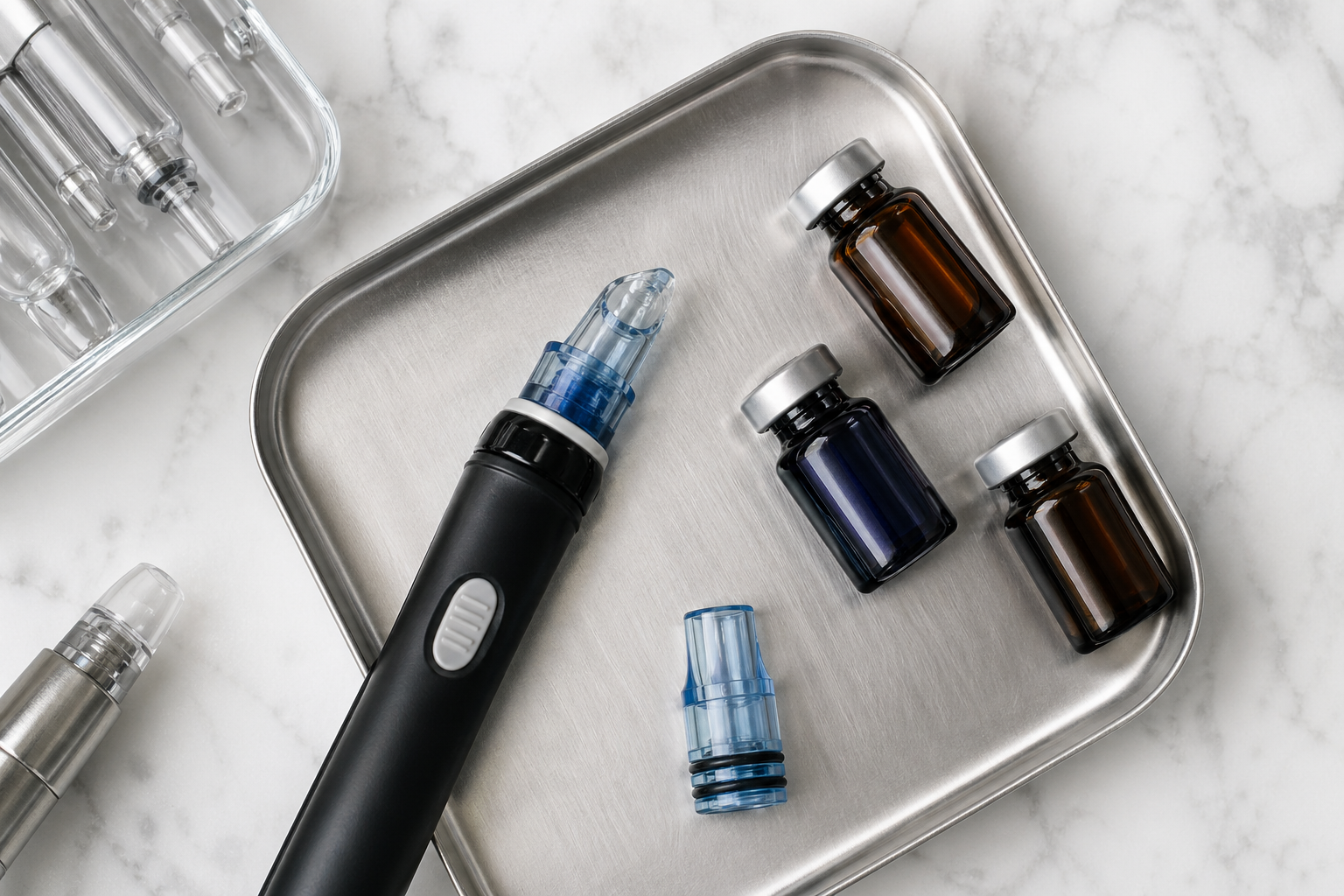
Base pricing across metro Detroit runs $150–$300 per session. Dr. Beauty in Detroit publishes a price menu starting at $150 for a standard HydraFacial. Add-on boosters — targeted serums for hyperpigmentation, anti-aging, or acne — typically add $50–$75 each. LED light therapy add-ons run an additional $50–$100. Platinum-tier packages that include lymphatic drainage and multiple boosters can reach $350–$400 at premium providers.
The core device and FDA clearance are identical across providers. What changes at higher price points is serum quality, add-on options, and the provider's clinical depth on the device. A standard Signature HydraFacial at a mid-market Royal Oak provider and a Platinum HydraFacial at a Birmingham boutique spa use the same platform. The difference is what gets customized around it.
Most providers offer package pricing that discounts 10–20% on a series of three or six sessions. For first-time patients, a single session is the right starting point before committing to a series.
Where to Get a HydraFacial in Metro Detroit
Several established providers offer HydraFacial across the metro. These are worth knowing by geography.
Dr. Beauty (Detroit and Southfield) — One of Detroit's longer-running med spas with a published price menu at drbeauty.com. HydraFacials start at $150. Useful for patients in the city or the Southfield corridor who want transparent pricing before booking.
Adorn Medical Spa (Dearborn) — 579 verified five-star Google reviews. Popular for pre-event prep and known for its culturally competent care for the Dearborn MENA community. Located at 24800 Michigan Ave, Dearborn. Groupon promotions — up to 37% off HydraFacial sessions — appear periodically for first-time patients.
Bloom Health (Bloomfield Hills) — Three HydraFacial tiers: Signature (three-step core protocol), Deluxe (adds a custom booster and LED light therapy), and Platinum (adds lymphatic drainage on top of Deluxe). Located at 2525 S Telegraph Rd, Bloomfield Township. Good option for patients who want a defined tier structure with clear add-on choices.
MUSE Medical Spa (Troy) — Four HydraFacial levels. Located at 1771 W Big Beaver Rd, Troy. Serves the Oakland County corridor including Sterling Heights and northern suburbs.
LaserDuet Med Spa (Dearborn) — Uses the patented Vortex-Fusion delivery system. Located at 15238 W Warren Ave, Dearborn. A second Dearborn option alongside Adorn with a different clinical profile.
Elizabeth Face + Body Med Spa (Ferndale) — Located at 928 E 10 Mile Rd, Ferndale. Serves Royal Oak, Madison Heights, Oak Park, and Birmingham patients along the 8 Mile corridor.
When comparing providers, ask two questions before booking: which HydraFacial tier do they offer, and what serums do they have available for customization. Providers with specific, knowledgeable answers are the ones with actual clinical depth on the device.

How Often Should You Get a HydraFacial?
Monthly sessions are the standard recommendation for ongoing maintenance. Your skin completes a full cell turnover cycle approximately every 28–30 days, so a monthly treatment hits the new surface at the point where extraction and hydration do the most work.
For a targeted concern — active acne, post-summer hyperpigmentation, or post-winter barrier damage — a series of six sessions produces the measurable improvements documented in published research. Ninety percent of patients in one published series saw visible improvements in skin texture and tone after completing six sessions. A 70% improvement in skin hydration was documented over 12 weeks of regular treatment.
For general maintenance with mild concerns, quarterly appointments are often enough. Most patients find their own rhythm between monthly and quarterly based on what their skin shows between sessions.
One Michigan-specific note: HydraFacial is safe year-round, including during Detroit's UV season from May through September. Unlike most laser treatments — which most Detroit providers will not perform between mid-May and September due to photosensitivity risk — HydraFacial carries no seasonal restriction. You can schedule it freely during summer months without timing complications.
Is HydraFacial Safe for Darker Skin Tones?
Yes. HydraFacial carries a lower risk profile for melanin-rich skin than most mechanical or chemical exfoliation methods. The treatment does not generate heat, which is the primary mechanism that triggers post-inflammatory hyperpigmentation (PIH) in Fitzpatrick Types IV–VI. Suction and serum delivery are device-calibrated, not dependent on manual pressure variability.
For Detroit patients with melanin-rich skin, two things are worth asking your provider before booking:
- Which brightening boosters do they have on hand? Hyperpigmentation affects melanin-rich skin at higher rates. Vitamin C, niacinamide, and kojic acid-based serums are useful for melanin regulation, and not all providers stock the same formulations.
- What is their experience with your skin tone? Adorn Medical Spa in Dearborn (579 five-star reviews) and House of Contour in Southfield (Forbes Black Business Mogul 2024, 213 five-star reviews) both have documented experience treating Fitzpatrick Types IV–VI at volume. That track record produces better serum calibration and extraction judgment for patients with thicker or more reactive skin.
How Does HydraFacial Compare to a Regular Facial?
A standard European facial relies on manual extraction (the provider squeezing pores by hand), a broadly applied chemical solution, and hydration products applied by hand. The result depends almost entirely on the provider's technique. The HydraFacial device standardizes the extraction step — suction pressure is consistent, serum delivery is measured, and the vortex tip reaches pore depth more reliably than manual pressure.
The practical difference shows up in two ways: more consistent results across appointments, and better reliability across more skin types. Manual extraction on sensitive or reactive skin carries variability. The device removes that variable.
Where HydraFacial Fits in Your Treatment Calendar
Two timing rules matter for Detroit patients.
For event prep: book 1–2 weeks before the date, not the week of. Pore cleaning produces some surface activity as congestion clears. A week's buffer means you arrive at peak glow rather than mid-process. For a complete bridal aesthetic timeline — where HydraFacial fits alongside Botox, fillers, and laser — the Detroit bridal aesthetic timeline maps every booking window for Michigan wedding seasons.
For seasonal skin recovery: April and early May are the highest-value window in metro Detroit. Michigan winters leave skin dehydrated, barrier-compromised, and congested from months of indoor heating. A HydraFacial resets the surface before Detroit's UV season begins, when most exfoliating treatments become more complicated to schedule. The Detroit spring skin prep guide covers this seasonal reset in detail.
If laser hair removal is also part of your plan, sequence HydraFacial before or after your active laser series, not concurrent with it. Michigan's laser treatment window runs October through mid-May. The guide on laser hair removal in Detroit covers the full seasonal timing and provider landscape for laser treatments across the metro.
Frequently Asked Questions
How much does a HydraFacial cost in Detroit?
Base HydraFacial pricing in metro Detroit runs $150–$300 per session. Dr. Beauty in Detroit starts at $150. Add-on boosters (targeted serums for hyperpigmentation, anti-aging, or acne) typically add $50–$75 each. Platinum-tier packages with LED therapy and lymphatic drainage can reach $350–$400. Most providers discount 10–20% on a series of three or six sessions.
How long does a HydraFacial take?
A standard three-step HydraFacial takes 30 to 45 minutes. Add-on treatments extend the appointment to 60 minutes. No recovery time is required — you can return to normal activities immediately after.
Is HydraFacial safe for Black skin?
Yes. HydraFacial does not generate heat, which is the primary mechanism that triggers post-inflammatory hyperpigmentation in melanin-rich skin (Fitzpatrick Types IV–VI). Suction and serum delivery are device-calibrated. Providers with documented experience treating darker skin tones, like Adorn Medical Spa in Dearborn and House of Contour in Southfield, can also customize booster serums for melanin regulation.
How often should you get a HydraFacial?
Monthly is the standard recommendation for maintenance, timed to your skin's 28–30 day cell turnover cycle. For targeted concerns like acne or hyperpigmentation, a six-session series produces measurable clinical results. For mild maintenance concerns, quarterly appointments are often sufficient.
Can you get a HydraFacial in summer in Detroit?
Yes. Unlike most laser treatments, HydraFacial has no UV-related seasonal restriction and is safe year-round in Michigan. You can schedule it freely during June, July, and August without the timing complications that apply to laser hair removal and other energy-based treatments.
Running a Detroit med spa and want new clients to find you in local search?
Caliber Web Studio builds med spa websites designed to rank for local searches and convert high-intent patients. Call (313) 799-2315 or book your free mockup to see what a revenue-ready Detroit med spa website looks like before you commit.